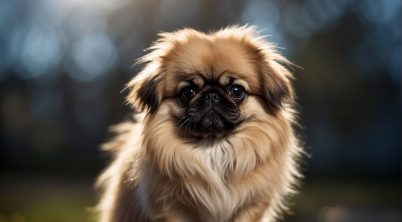
The Pekingese breed has a rich imperial history dating back to ancient China, where these small lion-like dogs were cherished companions of royalty. Today’s enthusiasts often wonder about the different varieties within this ancient breed. Unlike some dog breeds that have multiple distinct types, the Pekingese exists primarily as a single breed type with variations in size, coat color, and patterns rather than separate official subtypes. However, understanding these variations and the popular Pekingese mixes helps potential owners make informed decisions about which Pekingese is right for them.
This distinctive toy breed stands 6-9 inches tall and weighs between 7-14 pounds, featuring a flat face, luxurious double coat, and confident demeanor. While purebred Pekingese maintain consistent breed characteristics, individual dogs can vary in size within the breed standard and display numerous coat colors from solid black and fawn to multi-color combinations. The breed’s appeal extends to designer mixes that combine Pekingese traits with other popular breeds.
Whether considering a purebred Pekingese or exploring mix options, understanding the breed’s physical characteristics, temperament, and health considerations proves essential. This guide examines the authentic variations within the Pekingese breed, explores popular mixes, and provides insights into their care requirements to help readers find their ideal companion.
Table of Contents
Understanding the Pekingese Breed
The Pekingese originated in ancient China as a sacred companion to royalty, developing distinct physical traits and personality characteristics that define the breed today. These toy dogs combine a dignified temperament with specific breed standards that make them unique among companion breeds.
Origins and Historical Significance
The Pekingese breed traces its roots to China’s imperial court, where these dogs were exclusively owned by royalty for centuries. Legend claims they descended from a union between a lion and a marmoset, explaining their distinctive lion-like appearance that earned them the nickname “Lion Dog.” During the T’ang Dynasty, the Pekingese stood as the only recognized toy breed, and stealing one resulted in the death penalty.
These regal dogs served as living ornaments, carried in the sleeves of their owners’ robes to display wealth and prestige. The breed’s name references Beijing (formerly Peking), the location of the Forbidden City where they lived among Chinese emperors. Their status as sacred animals meant only members of the imperial court could possess them for many generations.
The Pekingese represents one of the oldest existing dog breeds, maintaining characteristics that have remained consistent throughout its long history.
Breed Standards and Physical Features
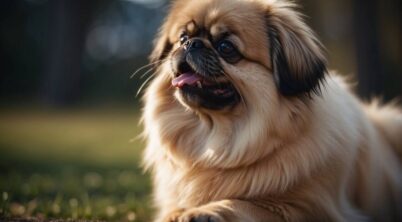
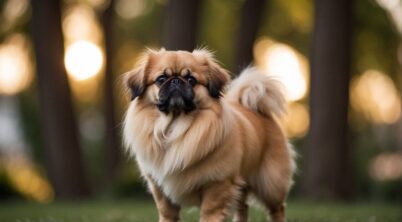
Pekingese dogs stand 6-9 inches tall and weigh between 7-14 pounds, creating a compact yet sturdy build. Their most recognizable feature is a flat face with large, expressive eyes and a prominent V-shaped facial wrinkle. The breed displays a heavy double coat that forms a distinctive “lion’s mane” of long hair around the neck and shoulders.
Common Coat Colors:
- Solid black, fawn, cream, and white
- Red and sable
- Brindle and tan
- Multi-color combinations and parti-colors
- Many feature black markings on the muzzle
The Peke’s coat varies in length and texture, requiring regular grooming maintenance. These toy dogs possess a characteristic rolling gait due to their body structure. Their short, bowed legs support a stocky frame that appears longer than it is tall.
Temperament and Behavior
Pekingese dogs exhibit a dignified yet playful personality, balancing independence with fierce loyalty to their families. These companion dogs form strong bonds with their owners while remaining reserved or aloof with strangers. The breed displays confidence despite its small size, maintaining the regal bearing of its imperial heritage.
These sophisticated dogs require early socialization to develop into well-rounded companions. Pekingese typically tolerate other animals and children but lack patience for roughhousing or rough play. They thrive as lapdogs, enjoying attention from their families while maintaining a strong-willed, independent nature.
The breed’s protective instincts make them devoted guardians despite their toy classification. Training a Peke requires patience and consistent positive reinforcement due to their stubborn streak. These companion dogs adapt well to various living situations, from apartments to houses with yards.
Recognized Pekingese Dog Types
The Pekingese breed includes several recognized types that differ primarily in size and breeding standards. Standard Pekingese represent the most common variety, while miniature and sleeve variations offer smaller alternatives with distinct historical significance.
Standard Pekingese
Standard Pekingese are the most widely recognized type within the breed. These dogs typically weigh between 7-14 pounds and stand approximately 6-9 inches tall at the shoulder. Male Pekingese generally weigh slightly more than female Pekingese, though both genders maintain the breed’s characteristic stocky build.
The standard type features the breed’s signature double coat, compact body structure, and lion-like mane around the neck and shoulders. These dogs possess a flat facial profile with large, dark eyes and a distinctive rolling gait. The American Kennel Club and other major kennel clubs recognize this as the official breed standard.
Standard Pekingese require regular grooming to maintain their luxurious coat. Their temperament reflects independence, loyalty, and courage despite their small stature. This type serves as the baseline for breed standards worldwide and represents the traditional Pekingese appearance developed over centuries in China.
Miniature and Sleeve Pekingese
Miniature Pekingese typically weigh between 4-7 pounds and stand 4-6 inches tall at the shoulder. These smaller dogs maintain the same physical characteristics as standard Pekingese but in a more compact form. The term “sleeve Pekingese” or “sleeve dog” originates from ancient China, where these tiny dogs were carried in the wide sleeves of imperial robes.
Sleeve Pekingese represent the smallest variation, often weighing under 6 pounds. These dogs were historically the most prized by Chinese royalty due to their portability and rarity. Modern breeders occasionally produce these smaller specimens, though they are less common than standard-sized dogs.
Both miniature and sleeve types face increased health considerations due to their diminutive size. They require careful handling and monitoring. Despite their size difference, these dogs display the same bold personality and distinctive features that define the breed.
Purebred Pekingese
Purebred Pekingese must meet specific genetic and physical standards established by kennel clubs. These dogs possess documented lineage traced through registered parents and ancestors, ensuring breed purity. Registration papers from organizations like the American Kennel Club verify purebred status.
Purebred Pekingese exhibit consistent breed characteristics including the flat face, rolling gait, heavy bone structure, and distinctive coat. Breeders maintain detailed records to preserve bloodlines and prevent genetic dilution. DNA testing can confirm purebred status and identify potential hereditary health issues.
The distinction between purebred and mixed-breed Pekingese affects appearance, temperament, and health considerations. Purebred dogs command higher prices and are eligible for dog shows and breeding programs. Responsible breeders focus on maintaining breed standards while addressing known health concerns specific to purebred Pekingese lines.
Pekingese Mixes and Related Breeds
Pekingese mixes combine the dignified temperament of the purebred Pekingese with traits from other toy breeds, creating designer dogs with varied appearances and personalities. These crossbreeds often weigh between 7-14 pounds and inherit characteristics from both parent breeds.
Peekapoo
The Peekapoo results from crossing a Pekingese with a Toy Poodle. This designer breed typically inherits the Poodle’s intelligence and low-shedding coat qualities alongside the Pekingese’s affectionate nature. Breeders developed this mix to create a companion dog suitable for households seeking a hypoallergenic pet option.
The Peekapoo requires moderate grooming despite its reduced shedding compared to purebred Pekingese. These dogs adapt well to various living situations, from apartments to larger homes. They form strong bonds with their owners and prefer constant companionship.
Physical characteristics include:
- Weight range: 8-20 pounds
- Coat texture: Wavy to curly
- Height: 9-11 inches
These dogs possess surprising stamina for their size and can participate in walks and light hiking activities. They respond well to positive reinforcement training methods but may exhibit the Pekingese’s independent streak.
Peke-a-tese
The Peke-a-tese combines Pekingese with Maltese lineage. Both parent breeds share similar size classifications and companion dog histories, resulting in a relatively predictable mix. This crossbreed typically displays a gentle temperament suited for families and individuals seeking a devoted lap dog.
The Peke-a-tese inherits a luxurious coat that requires regular maintenance to prevent matting. These dogs often display the alert watchdog tendencies of both parent breeds, announcing visitors with persistent barking. Their small size makes them vulnerable to injury from rough handling, particularly around young children.
These mixes typically stand 6-9 inches tall and maintain the flat-faced structure common to both parent breeds. Owners should monitor for breathing difficulties associated with brachycephalic features. The Peke-a-tese adapts well to apartment living with minimal exercise requirements.
Popular Crossbreeds
Shinese (Pekingese x Shih Tzu) represents one of the most sought-after Pekingese mixes, combining two ancient Chinese royal companion breeds. These dogs display strong attachment to their owners and require patient training due to their stubborn nature. The Shinese typically weighs 9-16 pounds with a long, flowing coat.
Cheeks (Pekingese x Chihuahua) produces tiny companion dogs weighing 6-14 pounds. This mix exhibits a bold personality disproportionate to its size and requires consistent training to prevent bossy behavior. Cheeks adapt well to apartment living with minimal exercise needs.
Peagle (Pekingese x Beagle) creates a friendly, affectionate companion with moderate energy levels. This crossbreed may inherit the Beagle’s vocal tendencies alongside the Pekingese’s watchful nature.
Other notable Pekingese mixes include crosses with the Pug, Japanese Chin, and Affenpinscher. Each combination produces unique physical traits and temperament variations depending on which parent breed’s characteristics dominate.
Color and Coat Variations
The Pekingese displays a remarkable range of coat colors and patterns, from solid reds and blacks to multi-colored parti combinations. Their distinctive double coat includes a lion-like mane that contributes to their regal appearance and requires consistent maintenance.
Red Pekingese
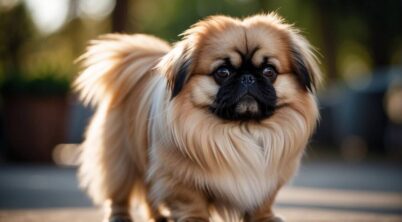
Red Pekingese are among the most recognizable color variations within the breed. The red coloring can range from a deep mahogany to a lighter copper tone, often with darker shading around the ears and muzzle. This warm, rich color enhances the breed’s expressive facial features and creates a striking contrast with their dark eyes.
The red coat may include sable characteristics, where individual hair shafts display multiple color bands from light to dark. Many red Pekingese develop a black mask across their muzzle, adding definition to their flat face. The intensity of red coloring can shift as the dog matures, with puppies sometimes starting darker and lightening over time.
This color variation pairs particularly well with the breed’s luxurious coat texture, as the red tones catch light and showcase the feathering around the legs, tail, and ears.
Other Common Coat Colors
Beyond red, the Pekingese appears in numerous other color variations. Fawn ranges from pale cream to deep tan, while black Pekingese display glossy, jet-black coats that emphasize their substantial appearance. Cream colored dogs offer a softer, lighter aesthetic that ranges from nearly white to buttery shades.
Parti-colored Pekingese feature white combined with patches of black, fawn, or grey, creating unique patterns that differ on each individual dog. Sable coats show a blend of colors with darker-tipped hairs over lighter bases. Brindle patterns create striped or marbled effects across base colors of red, fawn, or cream.
Grey or silver Pekingese are less common but display an elegant, luminous quality. Pure white Pekingese are rare and highly sought after, requiring diligent grooming to maintain their pristine appearance. Coat colors are determined by genetic inheritance from both parents, involving complex interactions between dominant and recessive genes.
Lion-Like Mane and Double Coat
The Pekingese possesses a distinctive double coat that creates the breed’s characteristic lion-like mane. The outer coat is long, straight, and coarse in texture, while the undercoat remains thick and soft. This double-layered structure provides insulation and creates the abundant ruff around the neck and shoulders that resembles a lion’s mane.
The mane is most prominent around the head, neck, and chest area, framing the flat face and giving the dog its imperial bearing. This feature originally connected the breed to Chinese lions in mythology. Feathering extends to the ears, back of the legs, tail, and feet, adding to the overall luxurious appearance.
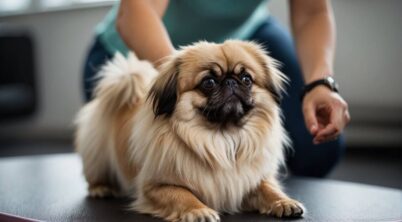
Regular grooming is essential to maintain the coat’s condition and prevent matting. The dense undercoat requires brushing at least weekly to distribute natural oils and remove loose hair. Without proper maintenance, the coat develops persistent tangles, particularly in the mane area and behind the ears.
Health and Care Considerations by Type
All Pekingese dogs face similar health challenges regardless of their classification, though size variations can influence the severity of certain conditions. Brachycephalic features affect breathing across all types, while eye conditions and spinal issues require consistent monitoring throughout the breed.
Brachycephaly and Breathing Issues
Pekingese dogs suffer from brachycephalic airway syndrome due to their flat faces and shortened skulls. This structural abnormality restricts airflow through narrowed nostrils, an elongated soft palate, and a compressed trachea. Dogs with this condition breathe loudly, snore frequently, and struggle to cool themselves through panting.
Heat intolerance poses significant risks during warm weather or physical activity. Exercise should be limited to cooler times of day, with sessions kept brief to prevent overheating. Obesity worsens breathing difficulties, making weight management essential for all Pekingese types.
Signs requiring veterinary attention include:
- Excessive panting or gasping
- Blue-tinged gums
- Collapse during activity
- Persistent coughing or gagging
Severely affected dogs may need surgical correction to widen airways. Miniature and sleeve varieties often experience more pronounced symptoms due to their compressed anatomy.
Progressive Retinal Atrophy and Eye Health
Progressive retinal atrophy causes gradual vision loss in Pekingese through deterioration of photoreceptor cells in the retina. Early symptoms include difficulty navigating in dim lighting, which progresses to complete blindness over time. This inherited condition has no cure, making genetic screening important for breeding programs.
The prominent, bulging eyes of Pekingese increase vulnerability to corneal ulcers, scratches, and dry eye (keratoconjunctivitis sicca). Daily cleaning around the eyes removes debris and prevents irritation from accumulated discharge. Hair near the eyes requires regular trimming to avoid contact with the corneal surface.
Squinting, redness, excessive tearing, or cloudy appearance warrant immediate veterinary examination. Dry eye responds to medicated eye drops, while ulcers need prompt treatment to prevent permanent damage. The lack of a protective muzzle leaves Pekingese eyes exposed to injury during play or outdoor activities.
Care for Miniature and Sleeve Types
Smaller Pekingese variants require heightened attention to hypoglycemia, particularly as pekingese puppies. These dogs have limited energy reserves and need frequent meals—at least three times daily—to maintain stable blood sugar levels. Signs of low blood sugar include weakness, trembling, disorientation, and seizures.
Intervertebral disc disease affects miniature types at higher rates due to their compressed spinal structure and disproportionate body length. The condition occurs when cushioning discs between vertebrae rupture or herniate, causing pain, weakness, or paralysis. Limiting jumping from furniture and maintaining healthy weight reduces risk.
Dental care becomes critical in smaller specimens with crowded teeth. Daily brushing with dog-specific toothpaste prevents tartar buildup and gum disease. Professional cleanings every 6-12 months address issues beyond home care capabilities.
Cold sensitivity increases in sleeve and miniature Pekingese due to their small body mass. Protective clothing helps during winter months or in air-conditioned environments. These delicate dogs also face higher anesthesia risks and require experienced veterinary handling during procedures.
* Banner photo by Joliot, cropped | Some rights reserved.