The Pekingese Shih Tzu mix, often called a Shinese or Peek-a-Tzu, combines two ancient Chinese breeds known for their royal heritage and distinct temperaments. This small designer dog typically weighs between 10 and 16 pounds and lives 11 to 16 years. The personality of a Pekingese Shih Tzu mix is characterized by loyalty, affection toward family members, and a confident disposition, though these dogs can display stubbornness inherited from the Pekingese parent and may exhibit protective instincts despite their small size.
These companion dogs form strong bonds with their owners and demonstrate high emotional intelligence. They adapt well to various living situations and show friendliness toward people, though their social behavior depends heavily on early training and exposure to different environments. The mix inherits the Shih Tzu’s playful nature alongside the Pekingese’s independent streak, creating a unique blend of traits.
Understanding this crossbreed’s personality helps potential owners prepare for both the rewarding companionship and the specific challenges these dogs present. From their grooming requirements to their health considerations, the Shinese demands attention to particular care aspects that stem directly from their personality traits and physical characteristics.
Table of Contents
Understanding the Pekingese Shih Tzu Mix Personality
The Pekingese Shih Tzu mix, commonly called Shinese or Peke-Tzu, exhibits a complex blend of traits from both parent breeds that creates a distinctive companion dog. This hybrid demonstrates strong loyalty and protective instincts while maintaining an independent streak that can challenge training efforts.
Core Temperament and Behavior
The Shinese dog displays high emotional intelligence combined with a naturally alert and watchful nature. These traits make the Shih Tzu Pekingese mix an effective watchdog despite their small size, as they remain vigilant about their surroundings and quick to announce unfamiliar sounds or visitors.
The breed exhibits a cautious approach toward strangers while forming deep bonds with family members. This protective temperament stems from the Pekingese heritage, which historically served as palace guardian dogs in ancient China.
Shinese puppies require early socialization to prevent their protective instincts from becoming excessive. Without proper exposure to various people, animals, and environments, the Peke-Tzu may develop defensive behaviors or excessive barking tendencies.
Key Temperament Traits:
- High emotional awareness and sensitivity to human moods
- Strong territorial instincts within their home environment
- Alertness that makes them reliable watchdogs
- Cautious but manageable approach to new situations
Affectionate and Loyal Nature
The Pekingese Shih Tzu mix forms remarkably strong attachments to their primary caregivers and family members. This loyalty manifests through constant desire for proximity and a tendency to follow their owners throughout the home.
The Shih Tzu and Pekingese mix thrives on physical affection and regular interaction with their family. These dogs often seek lap time and close contact, making them ideal companions for those who want a devoted pet that enjoys cuddling and attention.
Despite their affectionate nature, the Shinese maintains a dignified demeanor inherited from both parent breeds. They show love on their own terms rather than displaying the overly exuberant behavior common in some small breeds. This balanced approach to affection makes them suitable for households seeking a loving but not overly demanding companion.
Playfulness and Social Disposition
The Pekingese mix demonstrates moderate energy levels with bursts of playful behavior throughout the day. The breed enjoys interactive games and toys but does not require constant entertainment or excessive physical activity to remain content.
Social interactions with other pets require careful introduction and supervision. The Shinese can coexist peacefully with other animals when properly socialized, though their independent nature may lead to selective friendships rather than universal acceptance of all pets.
Children and the Shih Tzu mix can form positive relationships when mutual respect exists. The breed tolerates gentle handling but may withdraw or become irritable with rough play, making them better suited for families with older children who understand proper dog interaction.
Stubbornness and Independence
The Peke-Tzu inherits a notably independent mindset from both parent breeds, which historically served royalty and developed self-assured personalities. This independence translates to selective listening and a tendency to make their own decisions about when to comply with commands.
Training the Pekingese Shih Tzu requires patience and consistent positive reinforcement methods. The breed understands commands quickly due to their intelligence but may choose not to follow them without proper motivation. Harsh training methods prove ineffective and can damage the trust bond.
Their stubbornness appears most prominently during housetraining and learning boundaries. The Shinese may require longer training periods compared to more eager-to-please breeds. Short, engaging training sessions work better than lengthy repetitive drills that bore this intelligent but willful hybrid.
Training and Socialization Essentials
The Pekingese Shih Tzu mix requires consistent training and early socialization to channel their independent nature into positive behaviors. These intelligent dogs respond best to gentle, reward-based methods that respect their occasionally stubborn temperament.
Intelligence and Learning Style
The Pekingese Shih Tzu mix demonstrates moderate to high intelligence inherited from both parent breeds. These dogs learn quickly when motivated properly but can show selective hearing when commands don’t align with their interests.
Positive reinforcement works exceptionally well with this mix. Treats, praise, and play rewards encourage cooperation far better than harsh corrections. Training sessions should last 5-10 minutes to maintain their attention span.
Basic commands like sit, stay, and come are achievable within weeks of consistent practice. The breed responds particularly well to:
- Food-based rewards during training sessions
- Gentle verbal praise paired with physical affection
- Short, engaging activities that prevent boredom
Mental stimulation through puzzle toys and varied training exercises keeps these clever dogs engaged. Without it, they may develop unwanted behaviors like excessive barking or destructive chewing.
Socialization With People and Other Pets
Early socialization prevents the aloofness with strangers that both parent breeds can exhibit. Exposure to different people, environments, and animals between 8-16 weeks of age shapes a confident, well-adjusted adult dog.
Puppy classes provide structured socialization opportunities with other dogs and people. These classes teach basic manners while building comfort in new situations. The controlled environment allows the Pekingese Shih Tzu mix to interact safely with various dog sizes and temperaments.
This mix can coexist peacefully with other pets when introduced properly. Gradual, supervised introductions work best. Their small size makes them vulnerable to injury from larger dogs, so monitoring all interactions remains essential throughout their life.
Managing Stubborn Traits in Training
The independent streak from both parent breeds can manifest as stubbornness during training. This trait stems from their history as companion dogs bred for royal households, not for taking orders.
Consistency proves crucial when working with this mix. Everyone in the household must enforce the same rules and use identical commands. Mixed signals confuse the dog and reinforce resistant behavior.
Potty training presents a common challenge with small breeds like the Pekingese Shih Tzu mix. Crate training combined with frequent outdoor breaks establishes good habits. Patience is required, as house training may take several months.
When the dog refuses to comply, trainers should avoid confrontation. Instead, they should redirect attention to a different activity and return to the problematic command later. Making training feel like a game rather than a chore increases cooperation rates significantly.
Ideal Home Environment and Lifestyle Companionship
The Pekingese Shih Tzu mix adapts well to various living situations and forms strong bonds with different types of owners. This small dog thrives in compact spaces and excels as a devoted companion for multiple household types.
Apartment Living and Space Needs
The Shinese ranks among the best designer dogs for apartment living due to its compact size of 10-16 pounds. This breed requires minimal indoor space and can meet most of its exercise needs through short indoor play sessions and brief walks.
The flat-faced structure of this mix means owners must maintain a cool, well-ventilated environment. Air conditioning or fans become necessary during warm months to prevent breathing difficulties. A small designated area with a comfortable bed, water access, and a few toys satisfies the breed’s spatial requirements.
Noise levels remain moderate, though the Pekingese Shih Tzu mix will bark to alert owners of visitors or unusual sounds. This watchdog tendency makes them effective guard dogs for small apartments without creating excessive disturbance. The breed’s low exercise demands eliminate the need for large yards or extensive outdoor access.
Suitability for Families, Singles, and Seniors
The Shinese fits seamlessly into diverse household structures. Families with older children benefit from the breed’s playful yet gentle nature, though supervision remains important due to the dog’s small size and potential for injury during rough play.
Single individuals find an ideal companion in this mix, as the breed forms intense bonds with primary caregivers and adapts to various schedules. The dog’s moderate energy levels match well with working professionals who can provide attention during mornings and evenings.
Senior owners particularly appreciate the Pekingese Shih Tzu mix for several practical reasons:
- Minimal exercise requirements reduce physical demands
- Compact size makes handling and grooming manageable
- Calm temperament provides steady companionship
- Alert nature offers security without aggressive behavior
The breed’s lifespan of 11-16 years provides long-term companionship across different life stages.
Lap Dog Qualities and Human Bonding
This designer breed exhibits classic lap dog characteristics through its constant desire for physical proximity to owners. The Shinese seeks out laps, leans against legs, and follows household members from room to room throughout the day.
The mix displays high emotional intelligence and reads human moods effectively. It responds to owner stress with increased affection and adjusts activity levels based on household energy. This sensitivity creates deep bonds that strengthen over time.
Physical contact serves as the primary bonding method for this breed. Daily grooming sessions, gentle petting, and shared relaxation time reinforce the human-dog connection. The Pekingese Shih Tzu mix communicates through body language, soft vocalizations, and direct eye contact to maintain interaction with loved ones.
Physical Characteristics and Coat Features
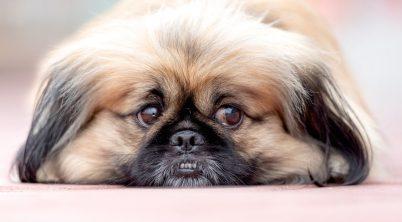
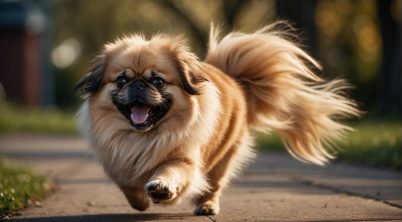
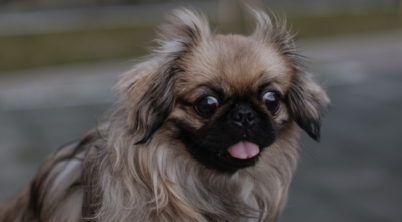
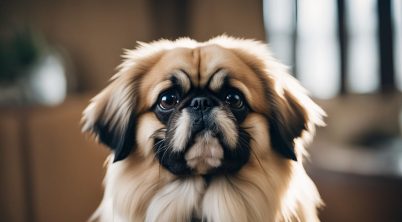
The Pekingese Shih Tzu mix displays a compact, sturdy build with a distinctive flat face and luxurious double coat that requires regular maintenance. These dogs inherit the traditional “lion dog” appearance from both parent breeds, resulting in a small but regal-looking companion.
Typical Size and Weight
The Pekingese Shih Tzu mix stands between 8-12 inches tall at the shoulder. Most adults weigh between 10-16 pounds, though some individuals may fall slightly outside this range depending on which parent breed they favor more heavily.
Their body structure is notably longer than it is tall, creating a rectangular profile. Despite their small stature, these dogs have a surprisingly sturdy and compact frame supported by short, strong legs. The tail is characteristically long and fluffy, typically carried in a curve over the back.
This size makes them well-suited for apartment living and easy to transport. Their weight should be monitored carefully, as their small frame can quickly show signs of obesity if overfed.
Coat Type and Color Variations
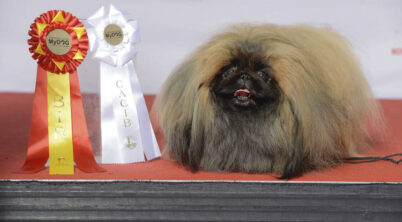
The double coat is one of this mix’s most defining features. The undercoat provides insulation while the outer coat is dense and often wavy, sometimes veiling the facial features. This thick coat requires significant grooming attention to prevent matting and maintain its condition.
Common coat colors include black, white, brown, and various combinations of these shades. Some individuals display solid colors while others feature multiple color patterns. Cream, gold, and gray variations also appear in this mixed breed.
The texture ranges from silky to slightly coarse, depending on which parent breed’s genes are more dominant. The coat grows continuously and can become quite long if not trimmed regularly.
Managing the Flat Face and Brachycephalic Traits
The flat face and short muzzle inherited from both parent breeds create specific care considerations. This brachycephalic structure affects breathing efficiency and makes these dogs sensitive to temperature extremes. They can overheat quickly during exercise or in warm weather.
Special feeding dishes may be necessary to accommodate their facial structure. The flat face also creates skin folds that require regular cleaning to prevent skin fold pyoderma and bacterial infections.
Owners should monitor for signs of respiratory distress, especially during physical activity. Keeping these dogs in moderate temperatures between 68-75°F helps prevent breathing complications. Their exercise should be limited during hot or humid conditions to avoid overheating.
Grooming Routine and Maintenance Needs
The Pekingese Shih Tzu mix requires consistent grooming attention due to their long, dense double coat that combines characteristics from both parent breeds. Daily care prevents matting and discomfort, while regular professional maintenance keeps the coat manageable and the dog healthy.
Daily Brushing and Preventing Tangles
Daily brushing is essential for a Pekingese Shih Tzu mix to prevent tangles and matting in their long, flowing coat. A slicker brush works effectively for removing loose hair and working through the coat layers, while a metal comb helps address any developing tangles. Owners should focus on high-risk areas including behind the ears, under the armpits, around the tail, and beneath the collar where mats form quickly.
The brushing session should start at the roots and work toward the ends of the hair to avoid pulling on the skin. For stubborn tangles, a detangling spray can make the process easier and more comfortable for the dog. Brushing sessions typically take 10-15 minutes when performed daily but require significantly more time if neglected for several days.
Bathing, Products, and Professional Grooming
Bathing should occur every 3-4 weeks using a gentle dog shampoo formulated for sensitive skin. A conditioner designed for dogs helps keep the coat soft and manageable after shampooing. The water temperature should be lukewarm, and owners must rinse thoroughly to prevent skin irritation from product residue.
Professional grooming every 4-6 weeks helps maintain coat length and shape while addressing areas difficult to trim at home. Professional groomers can perform sanitary trims around the paws, face, and rear areas. Between professional visits, owners should trim hair around the eyes to maintain clear vision and prevent eye irritation.
Dental Care and Ear Maintenance
Dental care requires regular attention since small breeds often develop dental problems. Brushing the teeth 2-3 times per week with dog-specific toothpaste prevents plaque buildup and gum disease. Dental chews can supplement brushing but should not replace it entirely.
Ear cleaning should occur weekly using a dog-specific ear cleaning solution and cotton balls. The breed’s floppy ears can trap moisture and debris, creating conditions for infections. Owners should gently wipe the outer ear area without inserting anything into the ear canal. Signs of infection include redness, unusual odor, excessive scratching, or discharge.
Health Considerations and Wellness Tips
The Pekingese Shih Tzu mix inherits potential health concerns from both parent breeds, particularly those related to their flat facial structure and compact build. Understanding these risks and implementing preventive care measures helps ensure a longer, healthier life for these companion dogs.
Common Health Issues in the Mix
Brachycephalic syndrome ranks among the most significant concerns for this crossbreed due to their flat faces. This condition causes breathing difficulties, especially during physical activity or in warm weather, and increases the risk of overheating.
Eye problems frequently affect these dogs because of their prominent, protruding eyes. Common eye conditions include:
- Cataracts that can develop with age
- Corneal ulcers from accidental scratches or irritation
- Progressive retinal atrophy
- Dry eye syndrome
Patellar luxation occurs when the kneecap slips out of place, causing limping or abnormal gait. This orthopedic issue ranges from mild to severe and may require surgical intervention in advanced cases.
Skin fold pyoderma develops in the facial wrinkles when moisture and bacteria accumulate. Regular cleaning of skin folds prevents this painful infection. Dental problems also emerge frequently due to crowded teeth in their small mouths, requiring consistent oral hygiene.
Exercise Needs and Preventing Obesity
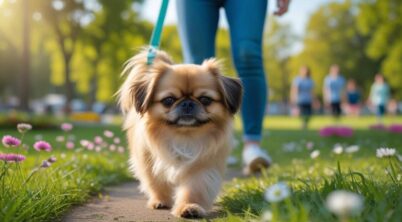
Moderate activity suits this mix best, with daily walks of 20-30 minutes split into shorter sessions. Their brachycephalic structure limits stamina, so vigorous exercise should be avoided.
Indoor play provides mental stimulation without overtaxing their respiratory system. Weight management proves critical, as excess pounds strain their joints and worsen breathing difficulties.
To prevent obesity, owners should:
- Measure food portions accurately
- Limit treats to 10% of daily calories
- Avoid table scraps
- Monitor body condition regularly
These dogs tire quickly and may overheat during activity. Exercise should occur during cooler parts of the day, with water readily available.
Proactive Veterinary Care and Lifespan
Regular veterinary check-ups every six months help detect issues early. The typical lifespan ranges from 11-16 years with proper care.
Annual examinations should include eye screenings, dental assessments, and joint evaluations. Vaccinations, parasite prevention, and bloodwork establish health baselines. Owners should schedule appointments immediately if they notice labored breathing, eye discharge, limping, or behavioral changes.
Maintaining a relationship with a veterinarian familiar with brachycephalic breeds ensures appropriate care. Some conditions require specialist referrals, particularly for complex eye or respiratory issues.